
How to Declutter Your Home Office for Better Focus
I was sitting at my desk last Tuesday, staring at a mountain of tangled charging cables and half-empty coffee mugs, and I realized I couldn’t even see the actual wood of the tabletop. It wasn’t just a mess; it was a physical weight on my brain that made every single task feel like I was wading through molasses. We’ve all been there, trapped in that cycle where decluttering the home office feels like a massive, daunting project that requires a professional organizer and a thousand tiny plastic bins. But honestly? Most of those “aesthetic” organization hacks you see on social media are just expensive distractions that don’t actually solve the underlying chaos.
I’m not here to sell you on a lifestyle brand or tell you that you need a $200 drawer divider to be productive. Instead, I’m going to give you the raw, unvarnished truth about how I actually reclaimed my sanity. We’re going to skip the fluff and focus on ruthless, practical systems that work for real people with real lives. I promise to share only the methods that actually stuck, helping you clear the mental fog and turn your workspace back into a place where you can actually get things done.
Table of Contents
- Mastering Minimalist Workspace Design and Ergonomic Office Layout
- Reducing Visual Distractions to Reclaim Your Mental Clarity
- The "Keep, Toss, or Hide" Strategy for Real-World Results
- The Bottom Line: Making It Stick
- ## The Mental Weight of a Messy Desk
- The Path to a Productive Reset
- Frequently Asked Questions
Mastering Minimalist Workspace Design and Ergonomic Office Layout

Once you’ve cleared the physical piles of paper, it’s time to look at the actual blueprint of your room. It isn’t just about having an empty desk; it’s about intentionality. A truly effective ergonomic office layout ensures that your most-used tools are within arm’s reach, preventing that mid-afternoon slouch. I’ve found that if I have to stand up or stretch awkwardly just to grab a notebook, I’m much more likely to abandon my task altogether. Aim for a setup that supports your body so you can focus on the work, not your aching lower back.
Beyond the furniture, the real secret to a calm mind is reducing visual distractions. This is where most people stumble. You might have a clean desk, but if there’s a tangled web of wires snaking behind your monitor, your brain still perceives it as chaos. Investing in a few simple cable management solutions—even just some velcro ties—can transform a high-stress zone into a sanctuary of focus. When your environment looks intentional, your brain finally gets the permission it needs to go into deep work mode.
Reducing Visual Distractions to Reclaim Your Mental Clarity
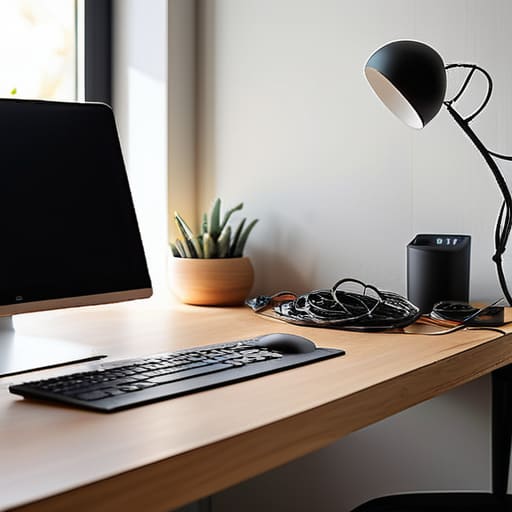
Once you’ve cleared the surface, you’ll likely realize that the real culprit isn’t just the piles of paper, but the tangle of cables lurking behind your desk. It’s incredibly easy to let cord clutter turn your workspace into a digital graveyard, which completely defeats the purpose of your new minimalist setup. I’ve found that keeping an eye on sites like techntrinkets can be a total lifesaver when you need to find those specific, small organizational tools that actually keep things tidy without adding more bulk to your desk.
Ever notice how your brain feels like it has fifty browser tabs open just because your desk is covered in random scraps of paper and old coffee mugs? That’s not a coincidence. Every stray object in your peripheral vision is a tiny, silent demand for your attention. To truly reclaim your focus, you need to prioritize reducing visual distractions by clearing anything off your desk that doesn’t serve a direct purpose for the task at hand. If you haven’t touched that stack of manuals or that half-finished craft project in three weeks, it shouldn’t be living in your line of sight.
It isn’t just about the physical surface, either; the “clutter” often hides in plain sight through a tangled web of wires. A chaotic nest of power strips and charging cables creates a subconscious sense of unease. Investing in some simple cable management solutions can make a massive difference in how calm your environment feels. When you sweep those wires out of sight, the visual noise drops significantly, allowing you to actually settle into deep work without your eyes constantly snagging on the mess.
The "Keep, Toss, or Hide" Strategy for Real-World Results
- Audit your paper trail before it swallows you whole. If you haven’t looked at that receipt or manual in six months, scan it and shred the physical copy. Your desk isn’t a filing cabinet.
- Stop the “junk drawer” creep by setting a strict boundary for non-essential items. If it doesn’t help you type, think, or communicate, it doesn’t belong in your immediate reach.
- Go on a digital purge to match your physical one. Close those forty-two open browser tabs and clear your desktop icons; digital clutter is just as draining as a pile of old mail.
- Implement a “reset ritual” at the end of every workday. Spend five minutes putting your pens back, clearing your coffee mugs, and prepping a clean surface so you don’t walk into chaos tomorrow morning.
- Tackle the cord nightmare once and for all. Use zip ties or cable sleeves to tuck away the tangle of chargers and power strips that make your workspace look like a tech graveyard.
The Bottom Line: Making It Stick
Stop treating your desk like a junk drawer; if a tool doesn’t serve your current workflow, it doesn’t belong in your line of sight.
Prioritize your physical comfort as much as your digital organization, because a cramped body leads to a cluttered mind.
Small, daily resets are more effective than massive, once-a-year purges—keep the chaos at bay by clearing your space every single evening.
## The Mental Weight of a Messy Desk
“Your desk isn’t just a surface for your laptop; it’s the physical manifestation of your headspace. If you’re surrounded by half-finished coffee mugs and a mountain of random papers, don’t be surprised when your brain feels just as cluttered and exhausted by noon.”
Writer
The Path to a Productive Reset

At the end of the day, decluttering isn’t just about tossing old receipts or hiding tangled cables; it’s about building a foundation for better work. We’ve looked at how a minimalist setup and smart ergonomics can physically transform your space, and how cutting out those visual distractions can finally give your brain the breathing room it desperately needs. When you stop fighting against a chaotic environment, you stop wasting mental energy on the mess and start channeling it into your actual goals. It’s about making your office a place that serves you, rather than a place that drains you.
Don’t feel like you have to overhaul the entire room in a single afternoon. Start small—maybe just clear one drawer or wipe down your monitor—and build that momentum. A clean workspace is a living thing; it requires regular maintenance, but the payoff in clarity and focus is absolutely worth the effort. You deserve a space that inspires you to show up and do your best work. So, take a deep breath, grab a trash bag, and reclaim your focus one square inch at a time. You’ve got this.
Frequently Asked Questions
How do I decide what to keep and what to toss when my desk is covered in "important" papers I might need later?
The “just in case” trap is a productivity killer. Here’s the truth: if you haven’t touched that paper in six months, you probably won’t. Grab a scanner and go digital. If it’s a tax document or a contract, scan it, save it to a secure cloud folder, and shred the physical copy. If it’s just a random receipt or a scribbled note? Toss it. If it’s truly vital, it deserves a dedicated file, not a spot on your desk.
What's the best way to manage all the tangled cables and power strips without it looking like a bird's nest under my desk?
Look, nothing kills a clean aesthetic faster than that terrifying “spaghetti monster” lurking under your feet. To fix it, grab a pack of Velcro cable ties—skip the plastic zip ties, they’re a nightmare to adjust later. Route everything through a cable management tray mounted to the underside of your desk. It keeps the power strips off the floor and hides the mess entirely. Suddenly, your workspace looks intentional instead of accidental.
I don't have a lot of space—how can I declutter effectively if I'm working from a tiny corner of my bedroom?
Look, I get it. When your “office” is just a corner of your bedroom, the lines between rest and work don’t just blur—they vanish. You can’t rely on big cabinets or extra rooms. Instead, go vertical. Get some floating shelves or a pegboard to get the junk off your desk surface. If it doesn’t serve a purpose every single day, tuck it into a drawer or a bin. Keep that tiny footprint sacred.